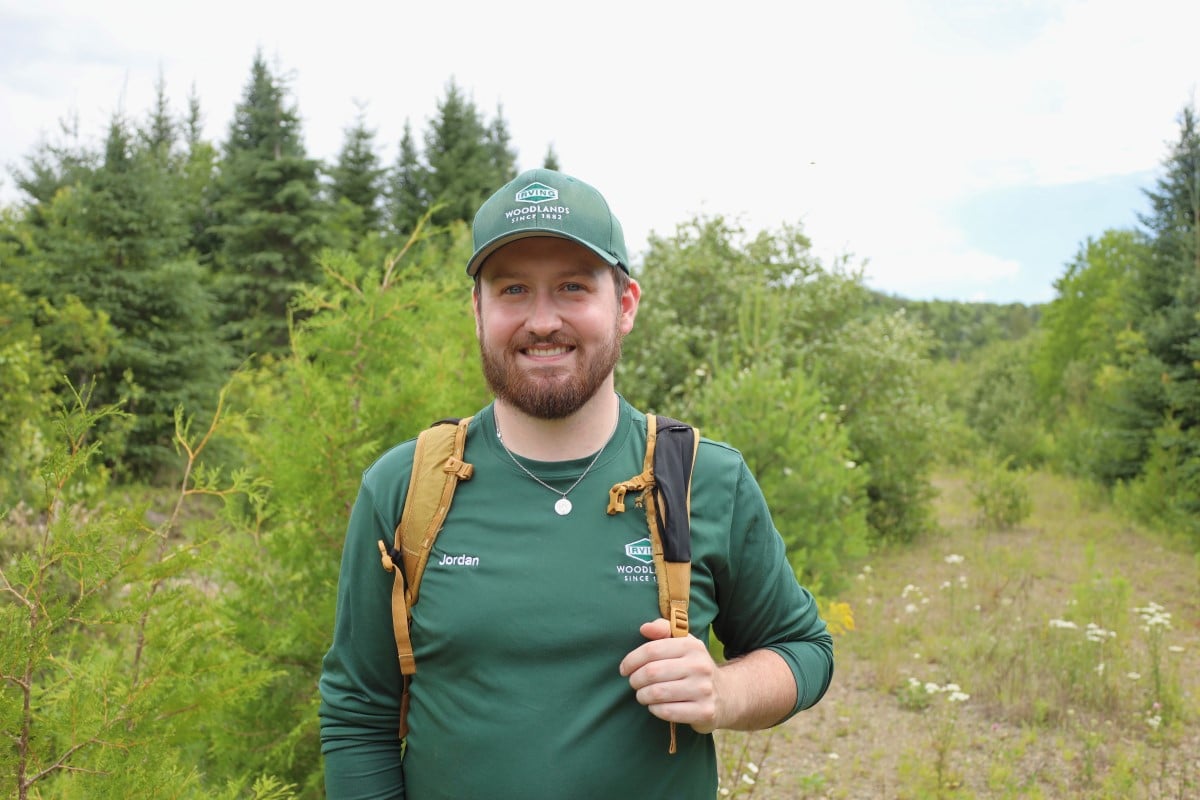
From science fair to forest conservation: Jordan Green
For Jordan Green, the forest is his office. Many of his days are spent in the field, installing monitoring equipment and collecting data to better understand the plants and animals that call the working forests home.
Jordan joined Irving Woodlands in January as a Research Coordinator, deploying the company's biodiversity monitoring network.
To date, he has deployed more than 260 birdsong recording units and 280 wildlife cameras across the lands managed by Irving Woodlands. Through this work, Jordan helps inform forest management decisions and deepen understanding of biodiversity in the woods.
This passion for forest ecology isn't new for Jordan.
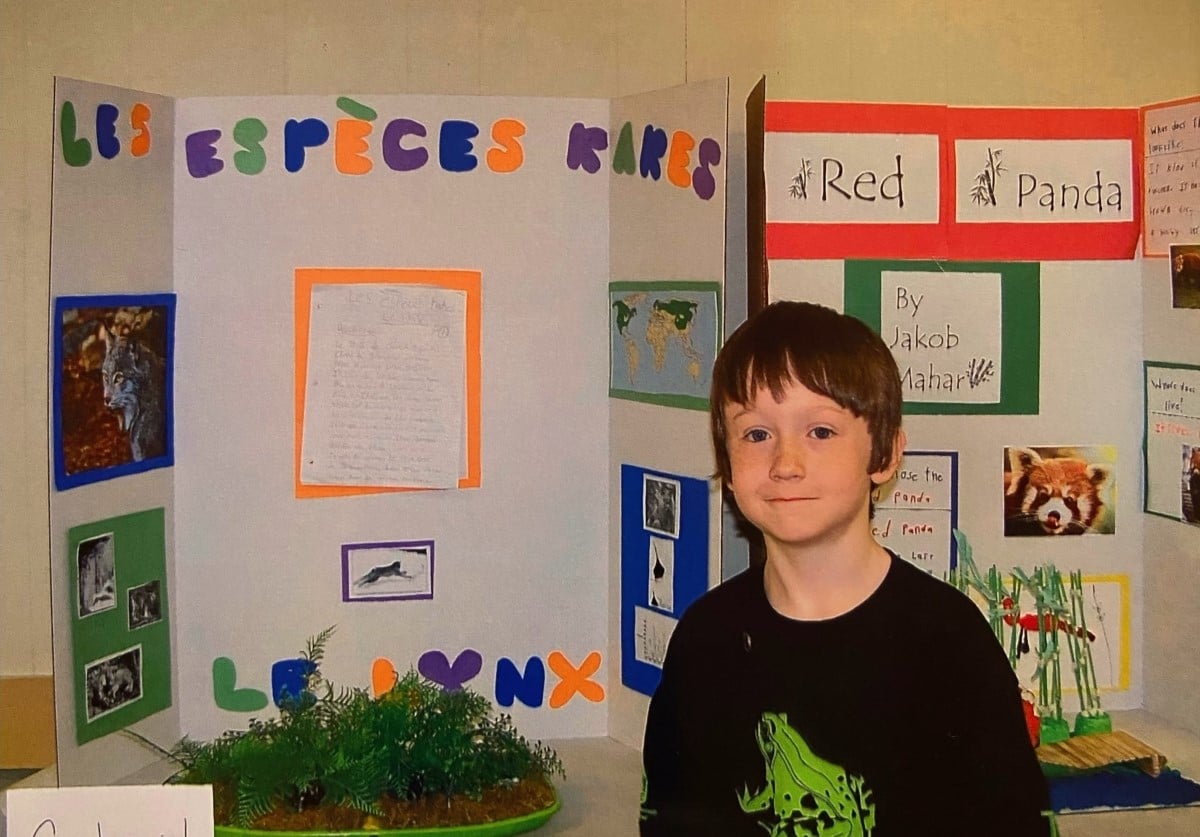
In Grade 2, Jordan did a science fair project on the Canada lynx. The next year, he studied garter snakes.
"Looking back on those science fair photos, it's really cool to see how my career has come full circle," he said.
That passion continued to grow throughout high school. In Grade 12, Jordan teamed up with a teacher to apply for a significant grant to help reduce the school's carbon footprint.
With the funding, Jordan led projects to upgrade the school's lighting to improve energy efficiency and install low-flow taps to reduce water consumption. The remaining funds were donated towards the purchase of a local nature preserve, helping cover half the cost of the land at the time.
"This grant opened my eyes to the fact that you can really make a career out of environmental stewardship," said Jordan.
Jordan earned his Bachelor of Science in Environmental and Natural Resource Management from the University of New Brunswick, before continuing on to complete a master's degree in forestry. It was during his graduate studies that he developed his biodiversity monitoring network, a system he continues to expand through his role with Irving Woodlands.
"To truly understand what we are conserving, we need to measure it," said Jordan. "Once we can correlate different bird and mammal species with different forest properties, we're able to better conserve those ecosystems, protecting the community of animals that live within."